Introduction
Shopping for a side-by-side is easy. Finding the best sport UTV that actually holds up to trail abuse, tows a trailer on Saturday, and still turns heads at the dunes is a different challenge entirely.
Sport UTVs sit at the intersection of high-performance off-road engineering and everyday practicality. They’re built with long-travel suspension, powerful engines, and race-proven chassis, but many models also haul cargo, plow snow, and handle chores. That combination of capability and versatility is exactly why sport UTVs consistently rank among the most searched, most reviewed, and most recommended powersports vehicles in the U.S. market.
Direct Answer: The best sport UTV models are worth the investment because they combine high-horsepower engines, advanced suspension systems, and durable drivetrains that outperform standard UTVs on rough terrain, while retaining enough utility (towing, cargo racks, 4WD) to double as a work vehicle. This delivers more long-term value per dollar than single-purpose machines.
Key Takeaways
- Sport UTVs are dual-purpose machines. The best models balance trail performance with real work capability, making them a smarter long-term buy than utility-only or sport-only side-by-sides.
- Suspension travel and horsepower are the top performance indicators. Look for 20+ inches of front/rear travel and engines in the 120 to 200+ HP range for serious sport performance.
- Resale value stays strong. Well-known sport UTV brands (Polaris, Can-Am, Yamaha) hold 55 to 65% of their value after 3 years, according to powersports resale data.
- “Best UTV for the money” isn’t the cheapest option. It’s the model with the lowest total cost per hour of reliable use.
- Maintenance costs are predictable. Most sport UTVs need service every 50 to 100 hours, far less demanding than dirt bikes or ATVs used at the same intensity.
What Makes a Sport UTV “Best in Class”?
Not every side-by-side marketed as “sport” actually performs like one. A genuine sport UTV is engineered around three pillars:
1. Suspension and Travel
Top sport UTVs feature 20 to 30 inches of front and rear wheel travel, using dual A-arm front suspension and trailing-arm rear setups. This is what separates a sport model from a base-trim recreational unit: the difference between absorbing a whoop section at 50 mph and bottoming out.
2. Engine Output and Drivetrain
Most best-in-class sport UTVs run turbocharged or naturally aspirated engines between 120 and 200+ horsepower, paired with on-demand 4WD or selectable 2WD/4WD systems. This gives riders control on technical terrain without sacrificing highway-adjacent speed on trail systems.
3. Chassis Durability
A sport UTV chassis needs to survive repeated hard landings. Reinforced tubular steel frames, skid plates, and reinforced A-arms are standard on models built for real sport use rather than light recreation.
Best Sport UTV for the Money: What to Actually Compare
When people search for the best sport UTV for the money, they’re usually comparing three things: price, performance-per-dollar, and reliability history. Here’s a simplified comparison framework:
| Factor | What to Check | Why It Matters |
| Horsepower-to-price ratio | HP divided by MSRP | Higher ratio means more performance per dollar spent |
| Suspension travel | Front/rear travel in inches | More travel means better high-speed durability |
| Warranty coverage | Length and parts covered | Reduces long-term ownership risk |
| Parts availability | Dealer network size | Impacts repair downtime |
| Resale value | 3-year depreciation rate | Affects true cost of ownership |
Buyers focused purely on sticker price often overpay in the long run through higher repair costs and faster part failure. The better metric is cost per reliable hour of operation, not upfront price alone.
Best Side by Side for the Money vs. Best UTV for Work and Play
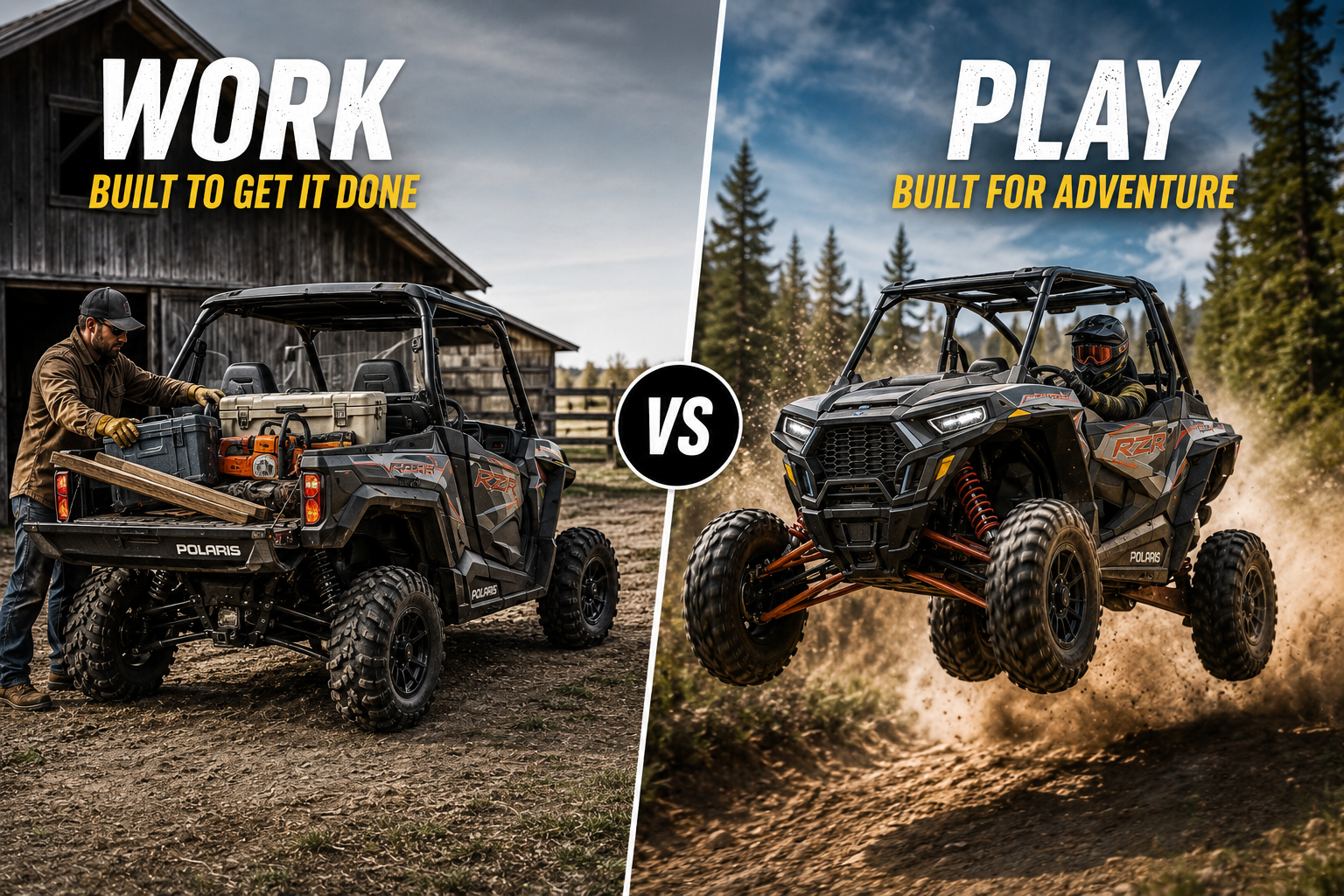
These two categories overlap more than most buyers expect.
- Best side by side for the money typically refers to models with strong base specs (respectable HP, adequate suspension, solid warranty) at a mid-range price point, usually $18,000 to $28,000 for a true sport trim in 2026.
- Best UTV for work and play refers to models that add utility features such as cargo beds, towing capacity (1,500+ lbs), and accessory mounts, without sacrificing sport-level suspension and power.
A machine that satisfies both categories is generally the smartest purchase for U.S. buyers who don’t have separate budgets for a dedicated work UTV and a dedicated sport UTV.
Practical Example
A landowner in a mountainous region might use a sport side-by-side to:
- Haul fencing materials and tools during the week (utility mode)
- Run technical trails on weekends at higher speeds (sport mode)
- Tow a small equipment trailer for property maintenance
This dual usage is precisely why sport UTVs with hybrid capability outsell single-purpose machines in most U.S. dealership sales data.
| Read Lions vs Bengals for more informative blogs |
Sport Side-by-Side Ownership Costs: What to Expect
Understanding total cost of ownership is critical to answering “is it worth the investment?”
- Fuel: Most sport UTVs average 10 to 15 MPG depending on terrain and driving style.
- Maintenance intervals: Oil changes every 50 to 100 hours; belt inspections every 25 hours for CVT-equipped models.
- Tires: Sport UTV tires typically last 1,500 to 3,000 miles depending on terrain aggressiveness.
- Insurance: Varies by state, but sport UTVs used off-road only are often cheaper to insure than street-legal models.
These predictable cost patterns make sport UTVs easier to budget for compared to heavily modified ATVs or dirt bikes used at comparable intensity.
How to Choose the Best Sport UTV for Your Needs
Follow this decision framework:
- Define primary use. Is it 70% trail riding and 30% hauling, or the reverse? This ratio should drive your suspension vs. utility feature priorities.
- Set a realistic budget band. Include a 10 to 15% buffer for accessories (winch, doors, lights).
- Check dealer proximity. Parts and service access materially affects long-term satisfaction.
- Test ride if possible. Suspension feel varies significantly between brands even at similar spec sheets.
- Review warranty terms. Powertrain warranties on sport UTVs typically range from 6 months to 2 years depending on brand and usage class.
Frequently Asked Questions
What is considered the best sport UTV in 2026?
The best sport UTV models in 2026 combine 120+ horsepower engines, 20+ inches of suspension travel, and reinforced chassis construction. Leading manufacturers in this category include Polaris, Can-Am, and Yamaha, each offering multiple sport trims at different price points.
What is the best sport UTV for the money?
The best sport UTV for the money is typically a mid-trim model that balances horsepower, suspension travel, and warranty coverage without premium-tier pricing. Buyers should compare horsepower-to-price ratio and resale value rather than sticker price alone.
Is a sport UTV good for both work and play?
Yes. Many sport UTVs are designed with hybrid functionality, including towing capacity, cargo beds, and accessory mounts, alongside sport-level suspension and power. This makes them practical for property work during the week and trail riding on weekends.
How much does a good sport side-by-side cost?
A true sport trim side-by-side generally costs between $18,000 and $28,000 in 2026, depending on engine size, suspension package, and included accessories. Higher-end turbocharged models can exceed $30,000.
How long do sport UTVs typically last?
With regular maintenance, sport UTVs can reliably last 3,000 to 5,000 hours of use, which for most recreational owners translates to 8 to 15 years of ownership. Engine and drivetrain longevity depend heavily on maintenance adherence and terrain conditions.
What suspension travel should I look for in a sport UTV?
Look for a minimum of 20 inches of front and rear suspension travel for serious trail performance. High-performance sport trims often exceed 24 to 30 inches of travel to handle high-speed terrain and jumps.
Do sport UTVs hold their resale value?
Yes, relatively well. Established sport UTV brands typically retain 55 to 65% of their original value after three years, assuming standard maintenance and moderate usage, making them a comparatively strong investment within the powersports category.
Conclusion
The best sport UTV models earn their price tag through a rare combination of trail-ready performance and everyday usability. Whether you’re comparing the best side by side for the money, evaluating a sport side-by-side for weekend trail riding, or looking for the best UTV for work and play, the smartest purchase is the one that minimizes cost per reliable hour rather than simply minimizing upfront price.
If you’re ready to compare current sport UTV trims side by side, start by test-riding two or three models in your budget range and requesting a full spec sheet comparison from your local dealer. It’s the fastest way to separate genuine sport performance from marketing spec sheets.